Intelligence
Or, will stochastic parrots rule the world?

Dear readers, it’s been forever and a day since I’ve posted on here and I ask your forgiveness. Thank you for supporting my rambles – it’s an honour to write to you every so often and know that you’ll read. I hope that you’re travelling well and finding moments of peace, joy and purpose in this increasingly chaotic world.
As I’m sure you’ve noticed, artificial ‘intelligence’ is making enormous headway in disrupting our world. I put ‘intelligence’ in inverted commas because, despite our human tendency to anthropomorphise, the large language models are not intelligent.
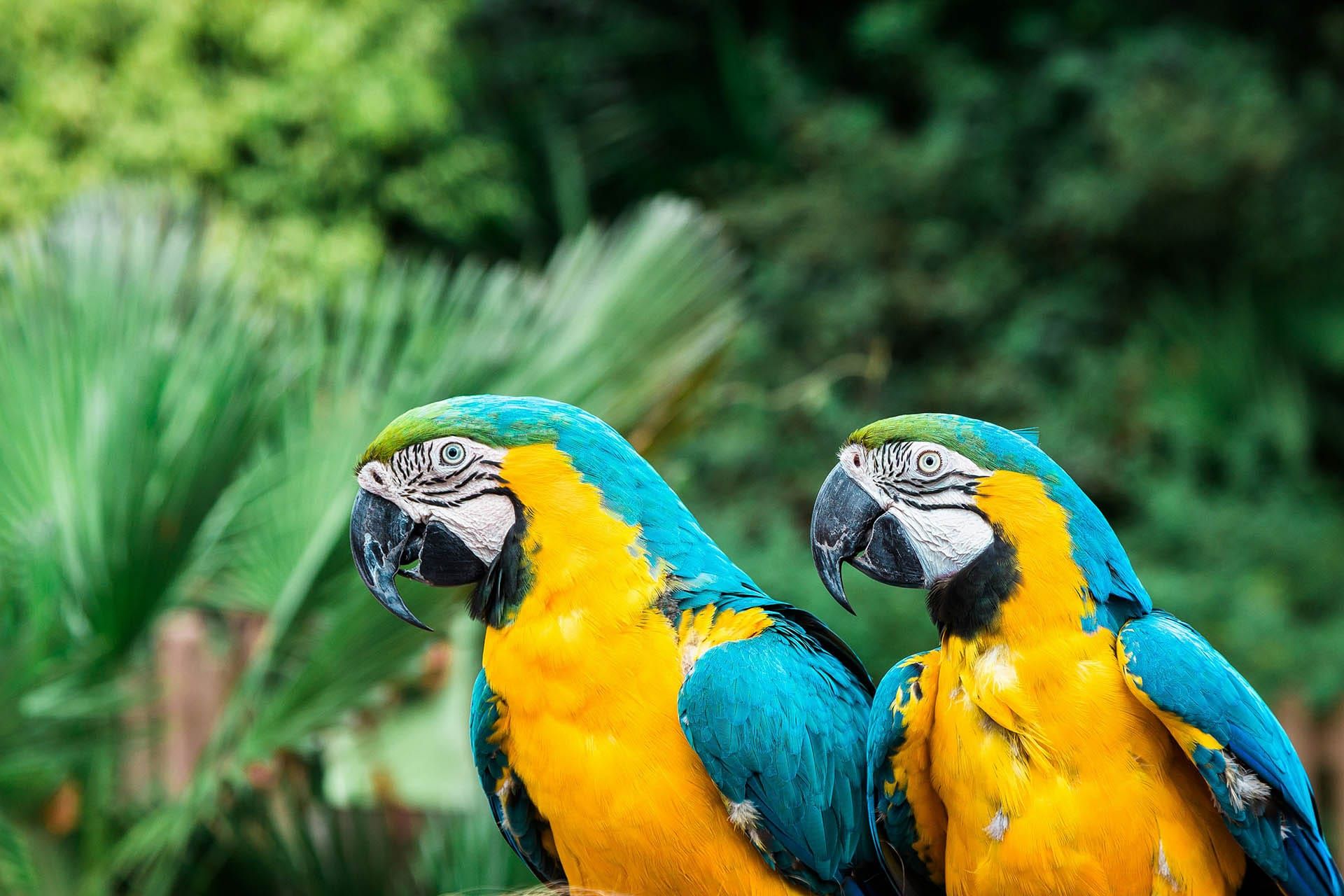
Instead, they are what Emily Bender and her colleagues, in an article available in the ACM Digital Library, call ‘stochastic parrots’ – machines that learn patterns and parrot them back at us.
The AI overlords train these parrots on the work of all the humans that came before them. Anthropic’s Claude AI, for example, devoured and destroyed hundreds of thousands – if not millions – of books in its quest to gobble up all of human knowledge.
Leaked internal documents from Microsoft showed that the tech giant’s Director of Applied Science, Brett Hecht, called scraping news to train AI the ‘largest theft of labour in human history’.
While they consume knowledge and parrot it back to us, LLMs are drastically changing our economies, sucking up water and taking loads of jobs. Fortune magazine recently reported that AI is causing job losses in the USA at a rate of more than 10,000 roles per month. Yesterday I met a chap who redeveloped his whole website with ChatGPT and I thought, there go all the web design agencies.
I loved this article in The Guardian by Hugh Rimington where he talks to a robot receptionist at a motor mechanic business, only to have to override her incorrect instructions so he could speak to a human. I think we’ve all had similar experiences, like getting nowhere with an online chatbot or becoming stuck in an unending phone call loop until you ultimately demand human involvement – assuming there’s a human there at all.
The reality is that, even though they suck, the robots are taking the jobs. Including mine. The writing is there on the wall of a data centre, in giant capital letters: WRITERS AND EDITORS NO LONGER NEEDED HERE.
I’ll confess, I sometimes use Claude in my work. I like how it pumps out a content plan in a matter of seconds, or helps me compare the features and benefits of various software. But I never use it in my personal, creative work – including this blog post.
The main reason for avoiding it in my creative work is that I don’t like teaching AI to write. I worry that every interaction I have with Claude has the potential to teach the bot how to be a better writer, hastening the demise of my livelihood.
My second reason for avoiding it is that Anthropic recently introduced a watermark feature to Claude, adding a secret key to text created or edited in that platform. This means eligible subscribers – such as universities – can use the feature to detect whether Claude has been involved in creating a text. For now, that’s probably not a lot of organisations, but I’m sure the group will grow. I believe publishers, for example, will use technology like the watermark, and I don’t want my reputation tainted.
So, I hereby declare: I will never use AI to help me write or review my blogs or my book manuscripts. I will struggle on, as writers over the centuries have, writing and reviewing my text with the help of trusted friends and mentors. And, in the case of this blog, I trust the editorial eye of the fantastic (and very human) Jennifer Butler. Thanks Jen.
For now, I can keep my written content pure in the programs that I use – primarily Microsoft Word and the Scrivener writing platform. Of course that may change, so I’ll have to keep abreast of such developments. For example, there could be a day in the future when we can’t use Word without Co-pilot or AI watermarks. It's easy to forget that, when we're using our Microsoft 365 accounts, every file is transmitted through the Microsoft servers. Our reliance on Microsoft certainly became apparent during the Friday the 13th outage, didn't it?
Meanwhile, I’m holding onto hope. The recent US midterm election results could slow down the development of data centres in that country – at least the market thinks so. And if leaders around the world were to step up, we could get some regulation to ensure ethical AI services.
It may be challenging to address the initial theft of knowledge but it is surely possible to address it going forward. Next week, Anthropic will start paying authors and publishers through the settlement of the Bartz v. Anthropic lawsuit. Anthropic will provide $1.5 billion in compensation to authors and publishers for over 400,000 works. This is a hopeful start.
I have great faith in the human capacity to adapt. I know there is a lot of talk about the robot-led end times but I don’t subscribe to those theories. I think it’s important to remember the concept of social license. As consumers and voters, we have a substantial amount of power. We can speak up and stand up for the kind of world we want to live in – and we must do this to check the power of the tech bros and tell our leaders what we think.
And you, dear reader, how are you tracking with all this? Has the rise of this so-called ‘intelligence’ affected your livelihood? What are your thoughts, projections and fears? Is AI something you embrace or resist? I’m always here for a robust conversation, so please get in touch.
